
Choosing the Right Funeral Service: 10 Steps to Help You Get it Right
Tukios Websites • October 14, 2022

Who gets to decide what is included in a funeral service? Each state has laws that govern who has control over the body of a person who has died. In most states if the individual was married, the spouse will be responsible for taking care of the disposition (what happens to the body) and funeral service. When there is no spouse the adult children will decide. If there is no spouse and the children are minors, then the parents of the deceased will be responsible. If the parents are also deceased, then brothers and sisters will become the responsible decision makers. 


As you can see, there are a variety of scenarios where “who decides” can get messy. Also know that the person who is going to pay for the funeral is entering into a contractual agreement with those who will provide service - the funeral home, crematory or cemetery. As a result, that person will have the “power of the checkbook”. With that power comes a considerable measure of control over decision making. 


There are different ways to approach putting together a funeral service. The “right” service is the one that honors the life of the deceased and provides ease for the survivors. When faith is important to the family or was important to the deceased that faith is usually reflected in the service. The right service fits the budget and does not create a financial burden. There are many options to consider in putting together a funeral. All of these choices ensure that every family is able to have a service that is right for them.


When you find yourself in the role of decision maker regarding a family member’s funeral, the ten steps below can help you assure the funeral will provide comfort to you and all of your family remembers.


Step #1 Take a deep breath and give yourself permission to fall short of “perfect”. 


Remember these famous words …


“You can please some of the people all of the time, you can please all of the people some of the time, but you can't …” … please all the people all of the time” (Poet John Lydgate as made famous by Abraham Lincoln).


Know that even when you do your best there may be some people who would have done differently. 


Step #2 Make a list of the people who are the “some” that you really do want to please


The spouse or partner, the children, the parents, sisters and brothers, and close life-long friends are all people who are likely to be deeply affected by the funeral service. These are the people the service needs to please. In order to plan the “right” funeral you will need to know what is important to these people. This does not mean everyone needs to or will agree. Nor does it require everyone weigh in on every decision. 


Step #3 Ask each of these people, “What is the one thing that you would most like to see included in the funeral service”


Write these answers down. Ask clarifying questions if needed in order to be sure you really understand what is most important to each of the people you are aiming to “please”. Don’t make any promises beyond that you intend to do your best. Do this before you have your appointment with the funeral director. Don’t forget to include what is most important to you on your list.


Step #4 Consider your budget and make a list of the questions you would like to ask the funeral director


There is no need to have all the answers or know exactly what you want included in the funeral service before the funeral arrangement conference. In fact, having your mind completely made up regarding service options might mean missed opportunity. No one knows better than the funeral director what can be done. After all, they do funerals every day. Fortunately for most of us, we are only responsible once or twice in a lifetime. 


It is a good idea to review any insurance policies or other funding that will be used to pay for the services you select. The “right” funeral should not create a financial hardship for family. Have an idea of what you can spend before you meet with the funeral director.


Step #5 Choose the person or persons who will go with you to the arrangement conference.


Because you have asked the important people for input, it will probably not be necessary to bring the entire group to the conference. You have already included them and will be able to represent their needs.

The arrangement conference is an emotional experience. Choose someone who will be helpful to you, who will support you. Bring those who will be attending the arrangement conference with you up to speed regarding the work you have already done. Review the information you have gathered from family members and discuss the budget with this person before your appointment.


Step #6 Prepare for the arrangement conference


· Review your list from the family members. Get a general idea of what folks want and need. 

· If your family member served in the Military look for discharge papers DD214

· Be sure you know about church membership and any organization that may play a part in the funeral service. The Shriners, Knights of Columbus, Free Masons, Legions, are Elks and are just a few of the many organizations that typically honor deceased members.

· If you plan to use insurance proceeds to fund the funeral service, gather those policies and bring them along to the conference for review.


Step #7 Consider how you want to remember the person for whom you are making funeral service arrangements


· Think about the funeral services your family has experienced in the past. What have they been like? What do you want to repeat and what should be changed for this funeral?


· How will religious affiliation influence the service? When all the people you are trying to please are members of the same faith group, planning this part of the funeral service is straightforward. You know who will officiate and what the service will include and not include.


Not all families have a connection with a church. In fact, religious affiliation in the US has been on the decline the last two decades. For families with no religious connection including a spiritual component in the funeral service can become a little more of a challenge. When there is no formal religious affiliation there are several ways to handle this aspect of the funeral service.


1. First, a spiritual component can be eliminated entirely. A funeral service is often done without a religious component. The life and accomplishments of the deceased can be the core of the service. Focus will be on work, family relationships, connection to the community, hobbies, travels, sports, vocations or avocations of the person who died. This type of service is often referred to as a celebration of life. A celebration of life can stand alone or be included with a religious service.


2. When there is a desire for a spiritual component but there is no obvious spiritual leader, the solution can be as simple as asking a family member or good friend to lead the group in a prayer. This person could also read an appropriate poem or piece of scripture. For those families who prefer to include a clergy person in the ceremony there are other options.


Your funeral director will no doubt know of a cleric who is willing to perform a service for persons who are not members of his or her congregation. In order to be sure this person is a good fit for your family, it will be important to think about what you do and do not want included in this part of the service. Share this with your funeral director and ask for guidance in choosing a person who will meet your expectations. When you contact the clergyperson be sure to ask what will be included in the sermon and service. Be sure the tone and content of the service will be a good fit for your situation.


In many areas of the country there are funeral celebrants who can be very helpful with putting together all aspects of a funeral service. Ask your funeral director if there is such a person in your community.


Step #8 At the Arrangement Conference You’ll Decide

· The timing of the service


A funeral service can take place before or after disposition of the body (burial or cremation). A funeral service that takes place after the body is either buried or cremated is called a memorial service.  A memorial service may be selected to comply with religion or because it is preferred by the family.


Some religions require that the body be buried or cremated within a brief time period following the death. For this reason, the funeral will take place days or even weeks after the burial has taken place. 


Family preference is another reason for the funeral to take place after either cremation or burial. Today many families live at great distances from each other. It may take weeks for travel arrangements to be coordinated and carried out so that everyone can come together for a service. The positive side of being able to delay service and opt for a memorial service is that no one misses out on the benefits of sharing the loss with others in the family circle. Talking out the cause of the death, remembering the good times, being a part of the service are all important steps on the path of reconciling loss of a close family member. All of these are a part of the right funeral service.


The downside to delaying service and option for a memorial service can be the length of time between the death and the healing power of gathering and having a service. When the time between the death and service stretches into weeks or months it can present a hardship for some family members. Some people can become paralyzed in moving forward with their grief work.


· Location of the service


Funeral services and memorial services may take place entirely at the funeral home. Funeral homes are clean, company ready, and have ample parking for all types of services. Most have equipment on hand to support any kind of service. Formal, informal, religious, celebration of life, and memorial services can all be accommodated at most funeral homes. Some funeral homes have the ability to host a funeral luncheon or brunch.


Funeral directors will also help those who chose to have the religious part of their service at church. For those who want or need to have their funeral service at a club or private location, the funeral director is ready to help facilitate that as well. 


· Tone and content of the funeral service


People have many aspects to their life. Sometimes they are serious, sometimes thoughtful and at times these same folks are playful. A funeral service may include these same kinds of changes in mood. There may be formal serious moments followed by less formal moments of sharing memories. Funerals almost always include both laughter and tears.


Step #9 Include Family members in the preparation and planning of the service


When you return from the arrangement conference with your funeral director you will have a list of decisions to make and things to do. Look at your list of core people. Who can help? Involving those who are up to helping is good for them and good for you. Many of the tasks that come with putting together a funeral not only serve the purpose of getting the funeral right, they also help those close to begin a healthy grieving process. Ask for help and delegate tasks. Some things that fall into this category include:


· Choosing clothing for the deceased


· Choosing pictures for display or a video


· Choosing the casket spray and or flowers from the family


· Contacting out of town family & friends


· Writing the obituary


· Writing and or delivering the Eulogy


· Selecting music


· Selecting readings


· Putting together objects for a memory table or display


· Choosing a venue and menu for the funeral luncheon


When you delegate any of these tasks be sure that you share the parameters. What exactly do you need and what are the limits? For example, perhaps the minister has asked that you select three songs for the service. Or, the funeral home will run a loop of thirty-five pictures on a television. Be sure the person you are placing in charge has all the information that they need to do the job correctly. Then step back and let them take over.


Remember you are working with people who also loved the person who died. Allow them to express their loss in their way. Understand they will choose differently than you would. Give them the gift of being allowed to participate in putting together a final tribute for the one you all loved.


Step #10 Review your plan


Before the day of the service take a moment to review what has been planned. Take a look at the first list you made. The one where each of your key people told you what was most important to them. Have you done your best to make sure they are each getting what they need? Is there anything that will take place in the service that is likely to catch a family member or close friend unaware? Is there any conversation you should have with anyone to explain or clarify anything that is planned?


Most important be sure the service you have arranged is “right” for you and your family. If the minister always does something that does not seem to fit right for your family speak up. If where you live people “always” have a receiving line or anything that you and your family don’t really like, speak up and change it. Funerals should be helpful and healing. They tend to stick with the closest family members. Make sure what you have planned is what you and your family want and need.

By Tukios Websites September 30, 2022
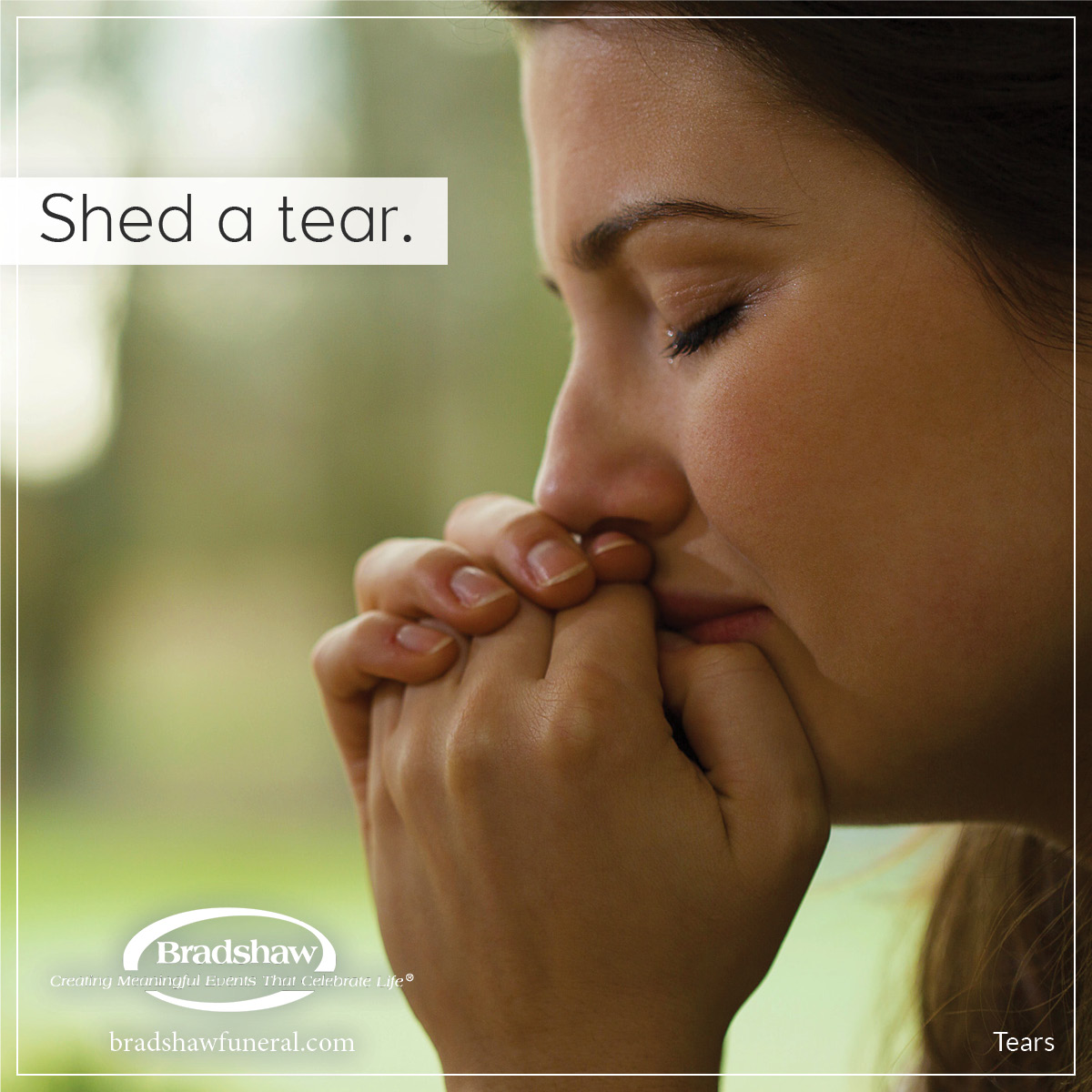
Should Americans get more comfortable with tears? When it comes to funerals Americans can sometimes feel uncomfortable both shedding tears or observing their flow from a fellow mourner. Perhaps you have attended a funeral and noticed those who need to weep often leave the room? They retire to the restroom or go outside for a breather. Why? What triggers tears? What are tears made of? Is there any benefit to shedding tears? Human beings actually shed, on average, between 15 and 30 gallons of tears each year. Both sexes cry. According to research, women cry an average of 3.5 times per month and men cry an average of 1.9 times a month. Tears are produced by the lacrimal gland located just above the eye. The lacrimal gland receives signals from both the autonomic nervous system and the frontal lobe of the brain. Humans produce three distinct types of tears. Each type has its own trigger, chemical make-up, benefit, and each looks different under a microscope. Basal tears are in the eye all the time. They lubricate, nourish, and protect the cornea. Basal tears shield the eye from dirt and debris. They are made up of a protein-rich antibacterial liquid that helps keep the eyes moist every time a person blinks. Basal tears are not unique to humans, as animals also produce this type of tear. Under a microscope these tears look like delicate branches of a tree or undersea coral. Reflexive tears/onion tear s are the tears that are triggered in response to an irritant. Smoke, wind, and chemical irritants trigger these tears. They come in greater quantity than basal tears and contain more antibodies to help fight bacteria. Their job is to flush the eye of the irritating substance. Under a microscope these tears look like a close pattern of dense snowflakes. Emotional tears are our funeral tears. They are also the ones we shed when we hear the national anthem and see our flag waving, watch our grandchild play the flute in her first music recital or score his first soccer goal. Emotional tears are amazing. These tears are unique to humans. They are triggered by the frontal lobe of our brain in response to our human experience. Their chemistry is different. They are thicker than our other tears making them more visible as they make their way down the cheek. These emotional tears contain additional proteins and hormones, they contain a natural pain killer as well as endorphins. Science is catching up to the ancient folk wisdom that says, “you’ll feel better after a good cry”. Under the microscope these tears actually look different based on the emotion that triggered them. Emotional tears look like fractured glass. (Rose-Lynn Fisher "The Topography of Tears") People may try to suppress tears if they see them as a sign of weakness, but science suggests that doing so could mean missing out on a range of benefits. There is still much to learn about the science of tears, but newer research indicates: 1. Tears have a self-soothing effect. Shedding tears helps people regulate their own emotions, calm themselves, and reduce their own distress. Crying activates the parasympathetic nervous system which helps people relax. 2. Crying helps people get support from others around them. Human beings are social. Crying is an attachment behavior: it rallies support from people around us and has an interpersonal social benefit. The human body is simply marvelous. Emotional tears literally stick to our face so others can see we need help! 3. Weeping helps to relieve pain. Tears release oxytocin and endorphins. These chemicals make people feel good and may ease both physical and emotional pain and promote a sense of well-being. 4. Crying may help lift people’s spirits and make them feel better. Oxytocin and endorphins can help improve mood. Maybe it is time to embrace our tears—or at the very least, respond with a hug and kind words when we see someone at a funeral crying.
By Tukios Websites September 30, 2022
By Tukios Websites September 16, 2022
According to the CDC, an older adult (age 65+) suffers a fall in the U.S. every second of every day, making falls the leading cause of injury and injury death in this age group. If you or someone you care about are in this age group, it is time to do a safety assessment and possibly make a few adjustments. Footwear · You are looking for support of the entire foot. Skip the mules, toss the stretched-out loafers, and go for shoes that stabilize the heel of the foot and fit snugly. Shoes that tie and have a non-slip sole are best. If you notice an older person is shuffling, not picking up their feet when they walk, check their shoes. House shoes/slippers should follow the same guidelines as outdoor footwear, closed in heel and non-slip soles. Snow and Ice · Can we just say, stay in during bad weather if possible? That means slowing down and doing a cost to benefit assessment before initiating action. Ask yourself, “why am I going out now?” Could the morning paper resting on the ice glazed driveway wait? Perhaps you could give the sun a chance to warm the pavement and melt the ice? What harm would come if you read the morning paper in the afternoon? We are all creatures of habit. We read our paper with our morning coffee; we get the mail from the box every day, sometimes the minute it arrives. Avoiding falls means slowing down, thinking it through, weighing the options and choosing safety over habit. When you do go out take the time to change into your boots, carry a walking stick or cane to help you stabilize, and choose the path that provides the most traction. Be sure someone knows you have gone outside or, if you are alone, take your cell phone with you. Changing Position · When moving from lying down (bed) to walking (to the bathroom) take your time. Sit on the edge of the bed, dangle your feet, give your head a moment to catch up to your new position. Then plant your feet squarely on the floor and wait one click before you take off for your destination. When moving from sitting to standing, plant your feet on the floor then push up using your thigh muscles to rise. Hint: Begin to preserve the strength in your thighs. When you reach your early 60s avoid using your arms to assist with getting from sitting to standing. Keep those thigh muscles strong as long as you can. Move. Move. Move. Find a Safety Buddy · Lots of seniors are spending more time alone these days. That means that if a fall does occur, they will be on their own. Finding someone who can act as a “safety buddy” for a senior living alone is a good idea. When the senior is going to do something “risky”, climb a ladder, wash windows, carry the Christmas tree to the basement, weed the garden, they would place a call to their safety buddy letting him or her know what they are going to do. The two would work together to determine how much time it will take to complete the task. The senior can pledge to call his buddy back when he has completed the dangerous task. That way if a fall occurs and the buddy doesn’t get his call back he will know to check in and get help if needed. Better yet, get help with dangerous tasks! Keep Moving · Inside or outside, keep moving and doing. Take a walk and take your phone with you. Walk your well-behaved dog. If you are a couch potato, clean up the space that surrounds you. Have you put too much of your stuff right at your fingertips so that you don’t need to move? Are you limiting your movement too much? If you are an impulsive/quick mover, slow down but do not stop. Keep your eye on where you are going when you move. Observe your surroundings and avoid the cracks in the sidewalk and the bumps in the road. Accidents are not planned. They always come unexpectedly. Listen to the little voice in your gut or head. When it says something should wait, or you should get help, or what you are considering doing is risky - LISTEN. Resist the temptation to overrule that inner warning. Look for a safer way to complete the task or work on finding someone to help you.
By Tukios Websites September 16, 2022
By Tukios Websites September 2, 2022
According to the Mayo Clinic, grief is “the natural reaction to loss. Grief is both a universal and a personal experience. Individual experiences of grief vary and are influenced by the nature of the loss.” There is a lot in the sentence above. Take a moment and let it all sink in. Grief is “natural.” It is not weakness. Grief is “universal.” Everyone feels grief. “Individual experiences of grief vary.” We all do grief in our own way. Grief is most often thought of as the emotional response to loss. But it is more than just emotional. Grief also has physical, cognitive, behavioral, social, cultural, and spiritual manifestations. There is no right or wrong way to grieve. Many psychologists tell us there is no way to avoid grief. There is no way around grief, only through. They counsel that to move beyond the pain of loss a person must feel grief. Why does grief hurt? The source of the pain is found in the nature of the loss. We are accustomed to thinking of grief as the feeling we have when we have lost someone we loved. But grief can also occur because you have lost someone who loved you. A parent, child, sibling, partner, or friend who really got you. Someone who made you feel loved. That love may have been something you felt every day, or it may have been a subtle rudder to your life. A love you just knew was there even though you did not hear its voice daily. Sometimes the loss is not only the loss of someone we loved, but it is also a loss of the incoming love we received from that person. Grief may also be triggered by a loss of purpose. When a child dies the mother no longer serves that mother role. When a husband leaves the wife is no longer a wife. When a person has been a caregiver and the person they cared for dies, the caregiver role is lost. It can be confusing for the person feeling this “loss of purpose” grief. Intellectually, a former caregiver may feel relieved their loved one is no longer suffering and may be dismayed at their own feelings of sadness. When providing care has filled a person’s day, loss of the caregiving role leaves a hole in their life. The feeling is grief. Death, divorce, and break-ups all trigger loss. That can be loss of the future that the one left behind planned to have with the person who is gone. Loss of hope. With the death, divorce, or break-up comes the end of the hope of a cure or of making the relationship work. Gone is the hope of growing old together. Even if the loss occurs after the love has gone, there is emotional pain, grief. Grief is difficult work. No one can expect to avoid the experience of grief. When the loss—and the grief that comes with it—is associated with a death, we have rituals anchored in thousands of years of tradition to help us. Funerals exist only because our collective experience as human beings have shown us that coming together, sharing our love of the deceased, and getting and giving a hug provides comfort and helps us as we begin the grief journey.
By Tukios Websites September 2, 2022
By Tukios Websites August 19, 2022
Nearly all experts say to wait at least six months to a year after a death or divorce before making big lifestyle changes like moving. Sometimes it is just not possible to allow yourself that much time. When that is the case, understanding the thinking behind this advice may help one avoid the pitfalls of making a quick move. When a person loses a spouse, it changes everything. If it was a long marriage the survivor has been functioning as a half of a team for such a long time that making decisions alone is a totally new skill. In a marriage of shorter duration loss of a spouse manifests as loss of a future. It can feel like you do not know where you are going. In either case, adjusting to the new reality is a daunting task in and of itself. Moving a household is third in the top three life stressors. Numbers one and two on that list are death of a spouse and divorce. That is why experts never suggest you take on moving when you have lost a spouse if it can be avoided. Moving is putting stress on top of stress. However, sometimes there is not a choice. When that is the case, understand you will not be thinking as clearly as you normally would. You will also be tired; grieving takes a lot of energy. Consider taking smaller, less permanent steps. Perhaps rent instead of buying a home. If you can, stay near your old home. That will mean less change. You will not be totally lost. You can shop at the same grocery and go to the same doctor. You will be able to continue activities and see friends. Moving always means packing and sorting belongings. That is a tall order under normal conditions; add grieving to the mix and it may feel overwhelming. Ask for help or hire help. If you can swing it, rent storage for six months and give yourself the gift of time. When you have lost the person you loved, objects associated with that person take on a heightened importance. Lightening your load to make a smaller space work for you or just to make the move itself more affordable may be overwhelming. If you can afford the luxury of putting off difficult sorting decisions, consider it money well spent. Be kind to yourself. When it comes to the larger furniture pieces, plan carefully. The big stuff usually has less emotion attached to it and it is the costliest to move. Measure your sofa, bed, and dining table. Go to your proposed new space and tape off the space where you plan to place these large objects. If the sofa is going to be too large do not move it, sell or donate instead. Use the dollars you save on moving to purchase pieces that fit your new space. The important thing is that you are able to rest and relax in your new space. That will not be possible if it is stuffed with too many items. You need room to breathe. You don’t need to feel overwhelmed by objects. Most importantly, ask for help and accept offers of help. Be specific about what you need your helpers to do. Let go. No one will do everything exactly as you would. Lean in, take a deep breath, eat healthy, and rest.
By Tukios Websites August 19, 2022
By Tukios Websites August 5, 2022
Whether your loved one was a beach enthusiast or a theme park fanatic, you might be thinking about where to scatter their cremated remains to pay tribute to what they loved in their lifetime. But just like if they wanted to be buried, a lot of thought should go into your loved one’s final resting place. Scattering the ashes of someone you loved is a beautiful way to say goodbye. There’s a feeling that they will find peace in the place that made them so happy while they were alive. But unfortunately, scattering remains is not that simple. There are a lot of rules and regulations about where you can distribute the ashes of someone who has passed on. Here’s where you can and definitely can’t be scattering ashes. Where can you scatter a loved one’s remains? For starters, your private property is always allowed to be a final resting place for your loved one’s ashes. It’s your property, and you can do what you want with it, to an extent. Scattering ashes in your yard isn’t a risk to your community, so you’re welcome to do it. One thing to keep in mind, though, is that you may have to disclose that there are human remains on the property should you ever decide to sell your home. Another common option is to scatter ashes at sea. However, specific rules and regulations apply in these cases. According to the EPA, scattering ashes in the ocean counts as a burial at sea. If you want to have a burial at sea, it will need to be done at least three nautical miles from shore. You must either scatter the ashes on their own or have them in a biodegradable urn. If you want to drop anything else with the ashes, like flower petals, be sure that they are also biodegradable. If your loved one was a furry friend, you will need a special permit, but human remains don’t require any sort of permit. However, any burial at sea must be reported to the EPA within 30 days of the ceremony. These rules only apply to scattering the ashes in an ocean, but if you’re hoping to place them in other bodies of water, different regulations may apply. It is illegal to scatter ashes in inland waters in some states, so before planning any ceremony, call the health and environmental agencies in your state to be sure it’s allowed. Like the ocean, scattering ashes is generally allowed at national parks, but certain rules are in effect. For instance, you’ll typically need a permit. You should always request permission from the chief park ranger and ask for the limitations of where you can scatter the ashes. For instance, there may be an environmentally sensitive area of the park where the ashes could be harmful to plant life. On the other side, you also shouldn’t drop the ashes too close to a trail, as you could run the risk of the ashes disturbing other travelers. Similarly, you’re allowed to scatter ashes on uninhabited public land in most cases. It’s very common for someone to want their loved one’s final resting place to be in a tranquil forest. However, although it’s usually legal, you’ll still want to contact local authorities to be sure. And, just like with national parks, don’t ever scatter ashes too close to a trail. Even if your loved one didn’t want to be buried, they might be allowed to be scattered in a graveyard. But whether or not they are allowed depends on the cemetery’s rules, local ordinances, and if the graveyard is public or private property. Be familiar with your town’s laws and contact the graveyard before attempting to scatter ashes there. Many privately-owned cemeteries now contain scattering gardens, which is the only place that they allow remains to be spread. The use of these gardens also often costs a small fee. Where can you not scatter a loved one’s remains? When it comes to most public land, you’ll need to contact local authorities or your state’s health and environmental agencies before planning any ceremony to scatter a loved one’s ashes. But as long as you follow local and federal regulations, you should still be able to give them the send-off you were hoping for. Private land, however, is generally more off-limits. Of course, you wouldn’t just show up at your neighbor’s house ready to scatter ashes without your neighbor’s permission, but it’s important to remember that private land often has public access. For instance, your loved one might have been a big baseball fan, but you can’t go to Fenway Park and just drop their ashes there. Fenway Park, like any major league baseball field, is privately owned. And while you can ask permission from the park’s owners to spread the ashes, the answer will most likely be no. The same applies to a theme park. For years, there was an urban legend that people were scattering ashes in Walt Disney World, but it turned out not to be so much of a myth after all. People attempt to sneak their loved one’s remains into the theme park every day, and if caught, security will escort the guests off property. Perhaps even worse, those remains can pose a health hazard, which is why as soon as ashes are found, the custodians will have to suck them up into a HEPA vacuum. The bag inside a vacuum is likely not the final resting place you were hoping to give your loved one. It’s better to scatter your loved one’s remains either on private property that you own or on public land. When it comes to your property, what you do with it is your business. With public land and waterways, local authorities will be able to answer any questions you have to be sure that you are scattering your loved one’s ashes in an ethical, environmentally conscious way. Give your loved one a goodbye in a beautiful location, knowing that you’re not doing harm.